
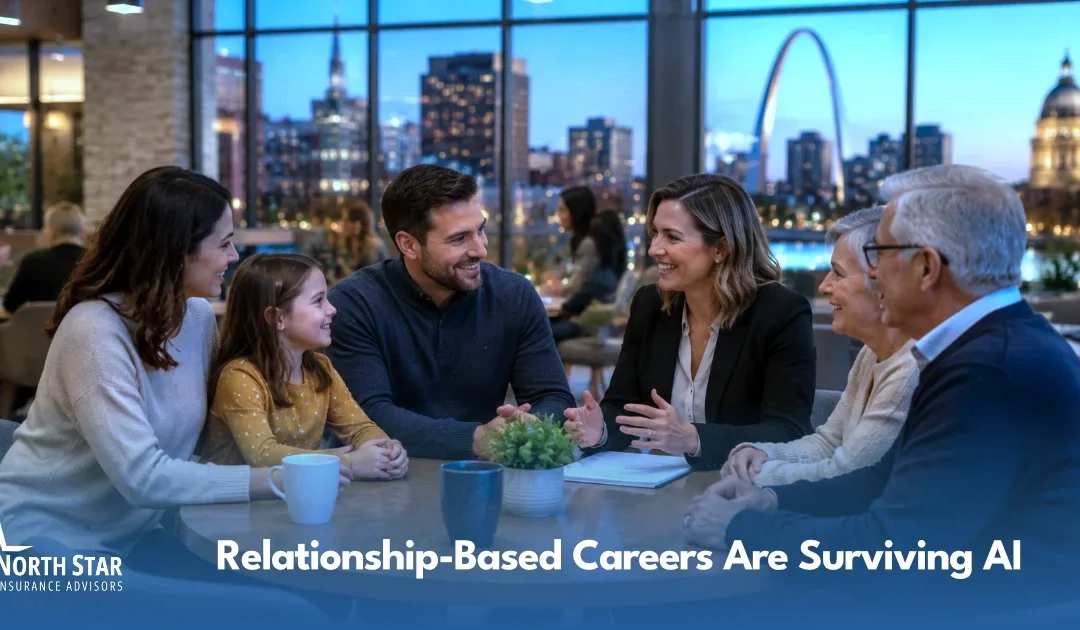
Artificial intelligence continues transforming industries, but many of the world’s most valuable careers still depend on trust, empathy, and human connection. In our pillar article, Will AI Replace Life Insurance Agents? Why Remote Insurance Careers Are Booming in 2026, we explore why relationship-driven professions remain highly relevant in the age of AI.
Artificial intelligence is changing how businesses operate. Tasks that once required significant time and effort can now be automated, analyzed, and completed faster than ever before. As AI continues advancing, many professionals are asking whether their careers will remain relevant in the future.
While technology is reshaping the workplace, one thing remains remarkably consistent: people still trust people.
The careers proving most resilient today are often those built around relationships. Whether helping families make financial decisions, guiding patients through healthcare choices, educating students, or advising clients on important life decisions, these professions rely on human connection in ways technology cannot easily replicate.
The future of work is not simply about technology. It is also about trust.
Technology Can Process Information, But People Build Relationships
Artificial intelligence excels at analyzing data, identifying patterns, generating recommendations, and automating routine tasks.
However, relationships operate differently.
Trust develops through conversations. Confidence grows through experience. Loyalty is built through consistency and genuine human interaction.
People often seek reassurance when making important decisions. They want someone who understands their concerns, answers questions, and provides guidance based on their unique situation.
These interactions involve emotional understanding and personal connection that technology still struggles to replicate.
Human Connection Still Matters
As technology becomes increasingly integrated into daily life, many people place even greater value on meaningful human interactions.
According to Gallup’s State of the Global Workplace: 2025 Report, engagement, communication, and human connection continue to play important roles in workplace satisfaction and professional success.
This trend extends beyond the workplace.
Consumers often prefer working with professionals who:
- Listen carefully
- Understand personal goals
- Communicate clearly
- Provide reassurance
- Build trust over time
The need for these qualities helps explain why many relationship-based careers continue to thrive.
Insurance Is Built on Trust
Insurance is one of the strongest examples of a relationship-driven profession.
When people purchase life insurance, they are making decisions that affect their families, finances, and future security.
Clients rarely choose coverage based solely on price.
They often want someone who can:
- Explain options
- Answer questions
- Understand family needs
- Provide recommendations
- Offer ongoing support
Technology can generate quotes and streamline applications, but clients frequently value personal guidance throughout the process.
This is why many professionals continue exploring opportunities through an Insurance Agent Careers Guide, Life Insurance Jobs Remote, and Remote Life Insurance Agent Jobs.
Financial Advisors Continue to Thrive
Financial planning is another profession built around trust.
Clients often discuss sensitive topics such as retirement goals, investments, family finances, and long-term planning.
While technology can analyze numbers and generate projections, many individuals still want guidance from someone they trust.
Financial advisors often help clients navigate uncertainty and make confident decisions during important life events.
These conversations remain deeply personal.
Healthcare Relies on Human Understanding
Healthcare professionals use advanced technologies every day.
Yet patient care continues to depend on communication, empathy, and trust.
People facing health concerns often need more than information.
They need:
- Reassurance
- Compassion
- Guidance
- Emotional support
- Human understanding
Technology can assist healthcare providers, but meaningful patient relationships remain essential.
Education Remains Relationship-Driven
Modern classrooms increasingly incorporate technology.
Students have access to online resources, digital learning platforms, and AI-powered educational tools.
However, education is still fundamentally about people.
Great teachers motivate students, encourage growth, provide mentorship, and adapt their approach based on individual needs.
Technology can support learning, but meaningful educational relationships continue to shape outcomes.
Leadership Cannot Be Automated
Leadership is another profession where relationships remain critical.
Successful leaders build trust, inspire teams, communicate vision, and help individuals perform at their best.
These responsibilities require emotional intelligence and interpersonal skills.
Technology may assist leaders with data and insights, but leadership itself remains deeply human.
Why Insurance Careers Are Well Positioned
Insurance combines technology with relationship-building in a unique way.
Today’s professionals use:
- Digital applications
- Virtual consultations
- CRM platforms
- Automated workflows
- Online communication tools
At the same time, their success depends heavily on trust, communication, and long-term client relationships.
This balance allows insurance professionals to benefit from technological innovation while continuing to provide value that remains difficult to automate.
The Future Belongs to Human-Centred Professionals
Many people view AI as a replacement for human work. A more accurate perspective may be that AI changes how professionals work rather than eliminating the need for them entirely.
Technology is most effective when it handles repetitive tasks and allows people to focus on higher-value interactions.
Professionals who build strong communication skills, develop emotional intelligence, and create meaningful relationships may find themselves increasingly valuable in the future workforce.
Final Thoughts
Artificial intelligence will continue transforming industries, but trust remains one of the most valuable resources in business and life.
The World Economic Forum’s Future of Jobs Report 2025 identifies communication, leadership, resilience, and social influence among the fastest-growing workplace skills. These qualities are deeply connected to human relationships and difficult to automate.
As technology evolves, careers built on trust, empathy, communication, and relationship-building are likely to remain among the most resilient opportunities available. Whether in insurance, healthcare, education, leadership, or financial services, people will continue seeking guidance from people they trust.
Related Articles to Read
Insurance Agent Careers Guide
Learn how successful insurance professionals build long-term client relationships while helping families make important financial decisions.
What Do Insurance Agents Do?
Discover why communication, trust, and relationship-building remain at the centre of modern insurance careers.
Life Insurance Jobs Remote
Explore remote insurance career opportunities that combine technology with meaningful client interactions.
Frequently Asked Questions
Relationship-based careers rely on trust, communication, empathy, and human understanding. These qualities remain difficult for AI systems to fully replicate.
AI can help automate administrative tasks and provide information, but clients often still prefer personalised guidance from trusted professionals.
Insurance, healthcare, education, financial advising, consulting, leadership, and coaching are strong examples.
Important decisions often involve emotions, uncertainty, and personal circumstances. Many people value reassurance and trust when making these decisions.
Insurance continues to benefit from strong demand because individuals and families need help understanding financial protection options.
Yes. Many professionals now use video meetings, digital tools, and online communication platforms to build relationships remotely.
Communication, active listening, empathy, professionalism, emotional intelligence, and problem-solving are among the most important.
Technology improves efficiency by handling administrative work, allowing professionals to spend more time serving clients and building relationships.
Many experts believe trust will become even more valuable as people seek human guidance in increasingly technology-driven environments.
Insurance professionals help clients understand options, evaluate risks, and make informed decisions about protecting their families and finances.
Build a Career People Can Trust
Technology will continue changing how businesses operate, but trust remains one of the most valuable assets in any profession.
Insurance offers an opportunity to build meaningful relationships, help families make important decisions, and create a rewarding long-term career while using modern technology to work more effectively.
If you’re looking for a future-focused profession built on communication, trust, and personal growth, explore opportunities with North Star Insurance Advisors.