

What Is Final Expense Insurance?
Final expense insurance is a type of whole life insurance specifically designed to cover end-of-life costs such as funeral services, burial expenses, and any remaining medical bills. Unlike traditional life insurance policies that are meant to replace income or provide long-term financial security, this type of coverage focuses on immediate expenses that arise after a person passes away. These costs can quickly add up, and without proper planning, they often become a financial burden for surviving family members.
Because of its focused purpose, final expense insurance is structured to be simple, accessible, and easy to maintain over time. It is especially beneficial for individuals who want a straightforward way to ensure their loved ones are not left dealing with unexpected costs. This type of policy is commonly known by several different names, including:
- Funeral insurance
- Burial insurance
- Final expense life insurance
If you’re unsure how much coverage you need, check our detailed guide on funeral insurance costs.
How Does Final Expense Insurance Work?
Final expense insurance works by providing a fixed payout to your chosen beneficiary after your death. This payout is typically smaller than traditional life insurance, usually ranging between $5,000 and $50,000, but it is specifically intended to cover immediate expenses. The process is designed to be fast and simple, allowing your family to access funds quickly when they need them the most.
One of the biggest advantages of this type of insurance is the flexibility in how the payout can be used. Instead of being restricted to a single purpose, the funds can be applied to a variety of essential costs that often arise during this time. These commonly include:
- Funeral expenses
- Burial or cremation
- Outstanding medical bills
- Legal and estate-related costs
Want to compare options? See the difference between final expense vs life insurance.
How Much Does Final Expense Insurance Cost?
The cost of final expense insurance depends on several personal factors, including your age, overall health, gender, and the amount of coverage you choose. In general, premiums tend to increase as you get older or if you have certain health conditions. However, compared to larger life insurance policies, final expense plans are designed to be more affordable and easier to manage over time.
For many individuals, coverage can start at around $1 per day, making it a practical option for those who want financial protection without a large monthly commitment. This simple pricing structure makes it easier to plan ahead and ensure your family is not left with unexpected expenses.
While exact rates will vary depending on your situation and the provider you choose, the best way to understand your cost is to compare personalized options.
If you want a detailed breakdown, see our guide on funeral insurance cost by age.
What Does Funeral Insurance Cover?
Funeral insurance is designed to cover a wide range of end-of-life expenses, many of which can be unexpectedly high. Planning ahead for these costs ensures that your loved ones are not forced to make difficult financial decisions during an already emotional time. The coverage is intended to handle both the essential services and additional arrangements that come with a funeral.
These expenses can vary depending on personal preferences, location, and type of service, but most policies are structured to cover the most common costs associated with funerals. These typically include:
- Burial or cremation services
- Casket or urn
- Memorial or viewing service
- Transportation and preparation
- Cemetery plot
Looking for coverage options? Explore best final expense insurance companies.
Final Expense Insurance vs Life Insurance
Final expense insurance and traditional life insurance may seem similar at first, but they are designed for very different financial purposes. Final expense insurance focuses on covering smaller, immediate costs related to end-of-life arrangements, while traditional life insurance is meant to provide long-term financial support, such as replacing income or paying off major debts.
Another key difference lies in the accessibility and application process. Final expense insurance is typically easier to qualify for and often does not require a medical exam, making it ideal for seniors or individuals with health conditions. In contrast, traditional life insurance policies usually involve stricter underwriting and offer much higher coverage amounts. Here is a simple comparison:
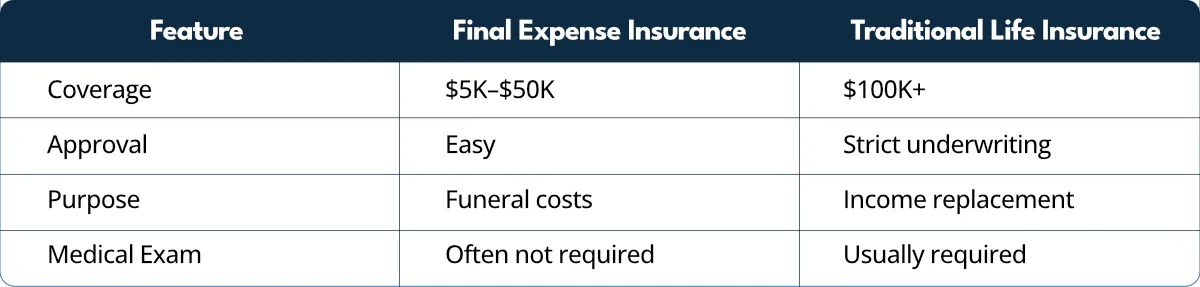
Read the full comparison here: final expense vs life insurance.
No Medical Exam Final Expense Insurance
No medical exam final expense insurance is designed to make coverage accessible to individuals who may not qualify for traditional policies due to health conditions. Instead of requiring a full medical evaluation, these plans rely on simplified applications or guaranteed acceptance, allowing applicants to secure coverage quickly and with minimal hassle.
While this convenience is a major benefit, there are a few important considerations to keep in mind. These policies often come with slightly higher premiums and may include waiting periods before full benefits are available. Despite these trade-offs, they remain a popular option for those who prioritize ease of approval. Key benefits include:
- No medical exam required
- Faster approval process
- Ideal for high-risk applicants
Best Final Expense Insurance Companies
Selecting the right insurance provider is just as important as choosing the right coverage amount. A reliable company ensures that your policy remains stable over time and that your beneficiaries receive the payout without complications. With many providers available, it’s important to compare your options carefully and focus on key features that indicate long-term reliability.
When evaluating different companies, you should look for qualities that reflect both financial strength and customer-focused service. These factors can help you avoid common issues and ensure that your policy performs as expected. Important things to consider include:
- Fixed premiums that never increase
- Strong financial ratings and reputation
- Immediate coverage with no waiting period
- Flexible payout options
Compare providers here: best final expense insurance companies.
Who Should Get Final Expense Insurance?
Final expense insurance is particularly beneficial for individuals who want to ensure that their end-of-life expenses are fully covered without placing a financial burden on their family. It is commonly chosen by seniors, but it can also be a practical option for anyone looking for a simple and affordable way to plan ahead.
This type of policy is especially useful for those who may not have significant savings set aside for funeral costs or who want a guaranteed solution regardless of their health condition. It is most suitable for:
- Seniors aged 50–85
- Individuals with health conditions
- People without savings for funeral expenses
- Families wanting to avoid financial burden
Is Final Expense Insurance Worth It?
For many individuals, final expense insurance provides a practical and affordable way to handle a very specific financial need. Funeral and burial costs can be significant, and without proper planning, these expenses often fall on family members during an already difficult time. Having a dedicated policy ensures that these costs are covered in advance.
Beyond the financial protection, this type of insurance also offers peace of mind. Knowing that everything is taken care of allows you and your loved ones to focus on what truly matters. It’s a simple yet effective way to reduce stress and provide lasting security.
Frequently Asked Questions About Final Expense Insurance
Understanding how final expense insurance works can help you make a more confident decision, especially when comparing different providers and policy types. Below are some of the most common questions people ask when considering this type of coverage, along with clear answers to guide you.
The amount of coverage you need depends on the average cost of funeral services in your area, as well as any additional expenses you want to cover. Most people choose between $10,000 and $20,000, which is typically enough to handle burial, service fees, and minor outstanding bills.
If you want a more precise estimate based on your age and location, it’s helpful to review a detailed breakdown of funeral insurance costs before choosing a policy.
Yes, many final expense insurance policies are designed specifically for individuals with pre-existing health conditions. Options like simplified issue and guaranteed issue plans allow you to qualify without undergoing a medical exam, making coverage more accessible.
However, these plans may come with slightly higher premiums or waiting periods. If you’re comparing options, you may want to explore no medical exam life insurance policies to find the best fit.
Some final expense insurance policies include a waiting period, usually lasting up to two years. During this time, the full death benefit may not be paid out unless the cause of death is accidental. This is common with guaranteed issue policies.
That said, many providers offer plans with immediate coverage and no waiting period. If avoiding delays is important to you, it’s worth comparing the best final expense insurance companies that offer instant protection.
Funeral insurance is a type of life insurance, but it is designed specifically to cover end-of-life expenses rather than provide large financial protection. Traditional life insurance typically offers higher coverage and is used for income replacement, while final expense insurance focuses on smaller, immediate costs.
If you’re unsure which option is right for you, reviewing a full comparison of final expense vs life insurance can help clarify your decision.
In most cases, final expense insurance payouts are processed relatively quickly, often within a few days to a couple of weeks after the claim is submitted. This ensures that families can access funds in time to cover urgent expenses like funeral arrangements.
The exact timing may vary depending on the provider and the completeness of documentation, but choosing a reputable insurer can help ensure a smoother claims process.
For many seniors, final expense insurance is one of the most practical ways to ensure that funeral and burial costs are covered without relying on savings. It provides a simple and affordable solution, especially for those who may not qualify for traditional life insurance.
By securing a policy in advance, seniors can protect their families from unexpected financial stress and gain peace of mind knowing everything is taken care of.
Get a Free Quote
If you’re ready to take the next step, comparing plans is the best way to find coverage that fits your needs and budget. Every provider offers different pricing and benefits, so getting personalized quotes can help you make a confident decision.
Get your free final expense insurance quote today and speak with a licensed advisor to find the best plan for your situation.