
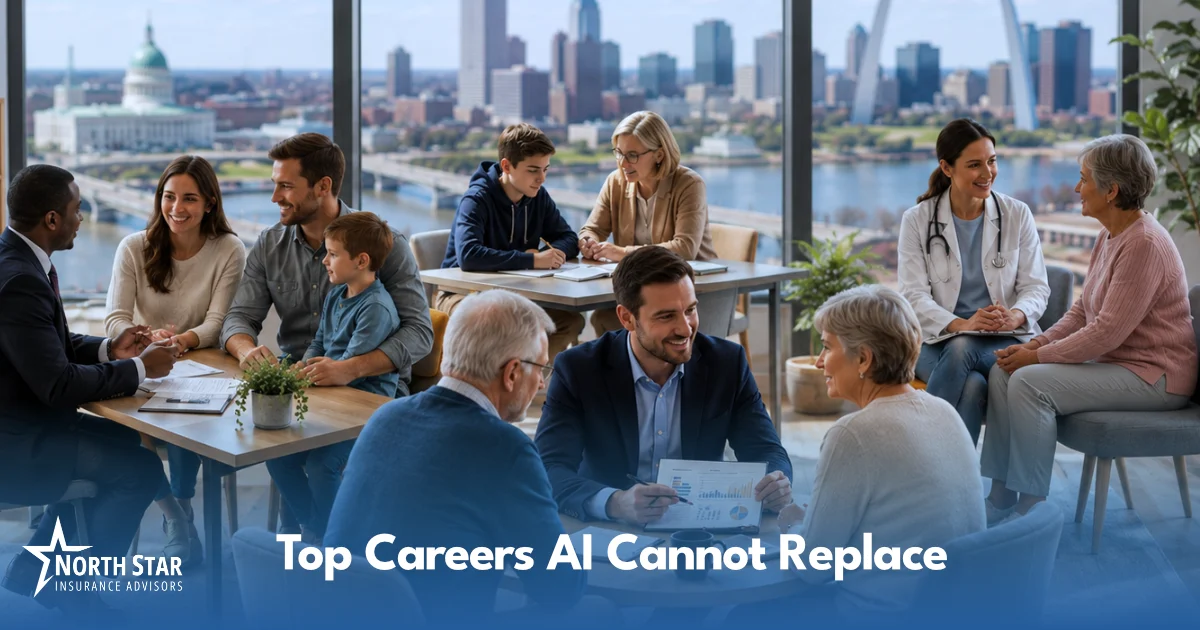
Artificial intelligence is transforming industries across the world, but careers built on trust, empathy, and human guidance continue to thrive. In our pillar guide, Will AI Replace Life Insurance Agents? Why Remote Insurance Careers Are Booming in 2026, we explore why insurance remains one of the most resilient professions in the age of AI.
Artificial intelligence is transforming industries at a pace few could have imagined just a decade ago. Businesses are using AI to automate repetitive tasks, analyze data faster, improve customer service, and increase operational efficiency. As AI adoption continues to accelerate, many workers are asking the same question: which careers will remain valuable in the future?
According to the World Economic Forum’s Future of Jobs Report 2025, technological change will reshape jobs globally while increasing demand for skills such as analytical thinking, leadership, resilience, and social influence. The report suggests that the future workforce will increasingly reward people who can combine technical capabilities with uniquely human skills.
Yet despite rapid advances in AI, there are still many professions where technology struggles to replace the value of human interaction. Careers that require empathy, trust, emotional intelligence, ethical judgement, and relationship-building continue to offer strong long-term opportunities.
Why Some Careers Are More Resistant to AI
AI performs exceptionally well when tasks are structured, repetitive, and data-driven. It can process vast amounts of information, identify patterns, generate reports, and automate routine workflows faster than most humans.
However, not all work follows predictable rules.
Many professions require people to navigate uncertainty, understand emotions, build trust, and make decisions based on complex personal circumstances. These areas remain difficult for AI to replicate because they rely heavily on human experience and interpersonal relationships.
Harvard Business Review’s 2024 article How AI Is Changing Work highlights that organizations increasingly value employees who can pair technological tools with communication, judgement, and relationship-building abilities.
As technology advances, these human skills are becoming more important rather than less.
1. Life Insurance Agents
Life insurance is one of the clearest examples of a profession that continues to depend on human connection.
When families purchase life insurance, they are often making decisions involving financial security, retirement planning, children, debt protection, and long-term goals. These conversations can be emotional and highly personal.
While AI can generate quotes and compare policy options, it cannot fully understand a family’s concerns, values, or unique circumstances in the way an experienced advisor can.
According to LIMRA’s 2024 Insurance Barometer Study, many consumers remain unsure about how much life insurance coverage they actually need. This knowledge gap continues to create demand for professional guidance and personalized recommendations.
Professionals interested in this field can explore our Insurance Agent Careers Guide, learn What Do Life Insurance Agents Do, and review Life Insurance Agent Responsibilities to better understand how the profession works.
2. Why Life Insurance Agents Remain Valuable
– Clients want personalized advice.
– Families often need help understanding coverage options.
– Important financial decisions require trust.
– Life circumstances frequently change over time.
– Emotional conversations require empathy and understanding.
These are qualities technology can support, but not fully replace.
3. Financial Advisors
Financial advisors help clients make some of the most important decisions of their lives. Retirement planning, wealth management, education funding, and long-term financial security often involve more than simple calculations.
Clients want someone who can understand their goals, explain risks, and provide confidence during uncertain situations.
While AI tools can assist with investment analysis and portfolio management, clients often seek reassurance and strategic guidance from a trusted professional.
Financial planning remains a profession built around relationships, communication, and trust.
4. Healthcare Professionals
Healthcare continues to be one of the strongest examples of a human-centred profession.
Doctors, nurses, therapists, and other healthcare professionals do far more than interpret medical information. They communicate diagnoses, support patients through difficult situations, answer questions, and provide emotional reassurance.
Patients often need compassion and understanding during stressful circumstances.
Technology may help improve diagnostics and efficiency, but human care remains essential.
5. Teachers and Educators
Technology can deliver information, but education is about much more than content delivery.
Great teachers inspire students, adapt to different learning styles, mentor individuals, and encourage personal growth. These interactions depend heavily on emotional intelligence and human connection.
Students often remember the people who influenced their lives far more than the information itself.
For this reason, education remains one of the professions least likely to be fully automated.
6. Mental Health Professionals
The growing focus on mental health has increased demand for therapists, counsellors, and behavioural health specialists.
Successful therapy depends on trust, empathy, listening skills, and emotional understanding. While AI may assist with administrative tasks or educational resources, meaningful therapeutic relationships remain difficult to automate.
People seeking emotional support typically want genuine human interaction, not automated responses.
6. Sales Professionals in Relationship-Based Industries
Many people assume AI will replace sales jobs. While some transactional sales roles may become increasingly automated, relationship-based sales continue to thrive.
Industries such as insurance, financial services, consulting, and business development rely heavily on trust and communication.
Successful professionals help clients:
- Understand options
- Evaluate risks
- Solve problems
- Make informed decisions
- Build long-term strategies
These interactions often require personal guidance and relationship-building skills that technology cannot easily replicate.
7. Leadership and Management Roles
Leadership requires far more than analyzing data.
Managers must motivate teams, resolve conflicts, mentor employees, communicate vision, and make difficult decisions involving people and organizational culture.
AI can provide information and recommendations, but leadership still depends on human judgement and emotional intelligence.
As organizations adopt more technology, strong leaders may become even more valuable.
Why Insurance Careers Are Particularly Well Positioned
Among the careers listed above, insurance occupies a unique position because it combines technology with human expertise.
Modern insurance professionals use digital applications, virtual meetings, automation tools, and AI-powered systems to improve efficiency. However, their core value remains helping people navigate important financial decisions.
According to the U.S. Bureau of Labor Statistics, insurance sales agents continue to play an important role in helping consumers evaluate financial protection options and understand coverage needs.
Professionals exploring Life Insurance Jobs Remote, Remote Life Insurance Agent Jobs, or Work From Home Life Insurance Jobs are entering a profession that benefits from both technological innovation and human connection.
The combination of flexibility, income potential, and relationship-building makes insurance one of the most resilient careers in the AI era.
The Future Belongs to Human Skills
Many workers fear that AI will eventually replace most jobs. The reality is likely to be far more nuanced.
McKinsey’s 2025 report Superagency in the Workplace: Empowering People to Unlock AI’s Full Potential at Work argues that organizations achieve the greatest results when technology and human capabilities work together.
Rather than replacing people, AI often removes repetitive tasks and allows professionals to focus on higher-value activities.
The most valuable future skills include:
- Communication
- Emotional intelligence
- Critical thinking
- Leadership
- Adaptability
- Relationship-building
- Ethical judgement
These skills remain difficult for AI systems to replicate.
How to Future-Proof Your Career
Instead of worrying about whether AI will replace your profession, focus on developing abilities that complement technology.
Professionals can strengthen their career prospects by:
- Improving communication skills
- Learning how to work with AI tools
- Building industry expertise
- Developing leadership abilities
- Strengthening problem-solving skills
- Focusing on relationship-building
People who can combine technology with strong interpersonal skills are likely to remain highly valuable.
Final Thoughts
Artificial intelligence will continue changing how people work, but it is unlikely to eliminate the need for trust, empathy, communication, and human judgement.
The Stanford AI Index Report 2025 highlights significant advances in AI capabilities, yet many of the world’s most valuable professions continue to depend on skills that technology struggles to replicate.
Careers built around relationships, guidance, and human connection remain among the strongest opportunities for the future. Whether in healthcare, education, finance, leadership, or insurance, the professionals who thrive will be those who learn how to work alongside technology while providing value that only people can deliver.
Related Articles to Read
Will AI Replace Life Insurance Agents?
Discover why human-centred insurance careers continue to thrive despite advances in artificial intelligence.
What Do Life Insurance Agents Do?
Learn how insurance professionals help families make informed financial protection decisions.
Insurance Agent Careers Guide
Explore licensing requirements, career growth opportunities, and what it takes to succeed in the insurance industry.
Frequently Asked Questions
Careers that rely on human interaction, emotional intelligence, communication, trust, and decision-making are generally considered more resistant to automation. Examples include insurance agents, healthcare professionals, teachers, therapists, and financial advisors.
AI can assist with quoting, paperwork, and data analysis, but it cannot fully replace the trust, empathy, and personalized guidance that clients often seek from professional advisors.
Many experts consider insurance a resilient profession because families continue to need financial protection, risk management, and professional guidance regardless of technological changes.
Communication, leadership, emotional intelligence, adaptability, relationship-building, critical thinking, and ethical judgement remain highly valuable because they are difficult to automate.
Yes. Technology has expanded opportunities for remote insurance professionals, allowing agents to serve clients through virtual meetings, digital applications, and online communication platforms.
AI can provide data analysis and portfolio insights, but many clients still prefer working with advisors who understand their goals, concerns, and personal circumstances.
Relationship-based careers depend on trust, empathy, and human understanding. These qualities are difficult for AI systems to replicate effectively.
Insurance, healthcare, education, consulting, financial services, and leadership roles are expected to use AI as a productivity tool rather than a replacement for professionals.
Focus on developing both technical and interpersonal skills. Learning how to use technology while strengthening communication and leadership abilities can improve long-term career prospects.
Yes. The combination of growing demand, remote work opportunities, technology support, and relationship-based interactions continues to make life insurance a strong career choice.
Looking for a Career That Can Thrive Alongside AI?
Technology is changing how people work, but the most successful careers still rely on trust, communication, and human connection.
The insurance industry offers a unique opportunity to combine modern technology with meaningful client relationships. Whether you’re exploring a new career path or looking for a profession with long-term growth potential, insurance remains one of the strongest future-focused industries.
Explore opportunities with North Star Insurance Advisors today.