As technology continues creating new opportunities in the insurance industry, more people are discovering career paths that focus on skills, communication, and adaptability rather than traditional credentials. In our pillar article, Will AI Replace Life Insurance Agents? Why Remote Insurance Careers Are Booming in 2026, we explore why modern insurance careers remain accessible to motivated professionals from a wide range of backgrounds.
Many people assume that successful careers require a university degree. While higher education can certainly be valuable, it is not the only path to professional success. In fact, many industries place increasing importance on practical skills, communication abilities, and real-world performance.
The insurance industry is one of those fields. Every year, professionals from a variety of educational and career backgrounds enter insurance and build rewarding careers. Some have college degrees, while others come directly from customer service, retail, hospitality, healthcare, construction, military service, or other professions.
If you’ve ever wondered whether a lack of formal education could prevent you from building a successful career, the answer may surprise you.
The Insurance Industry Values Skills
Unlike some professions that require specialized academic qualifications, many insurance careers focus heavily on skills that can be learned and developed over time.
Successful insurance professionals often excel because of qualities such as:
- Communication
- Active listening
- Reliability
- Problem-solving
- Professionalism
- Adaptability
These traits are not exclusive to degree holders. They can be developed through work experience, personal growth, and continuous learning.
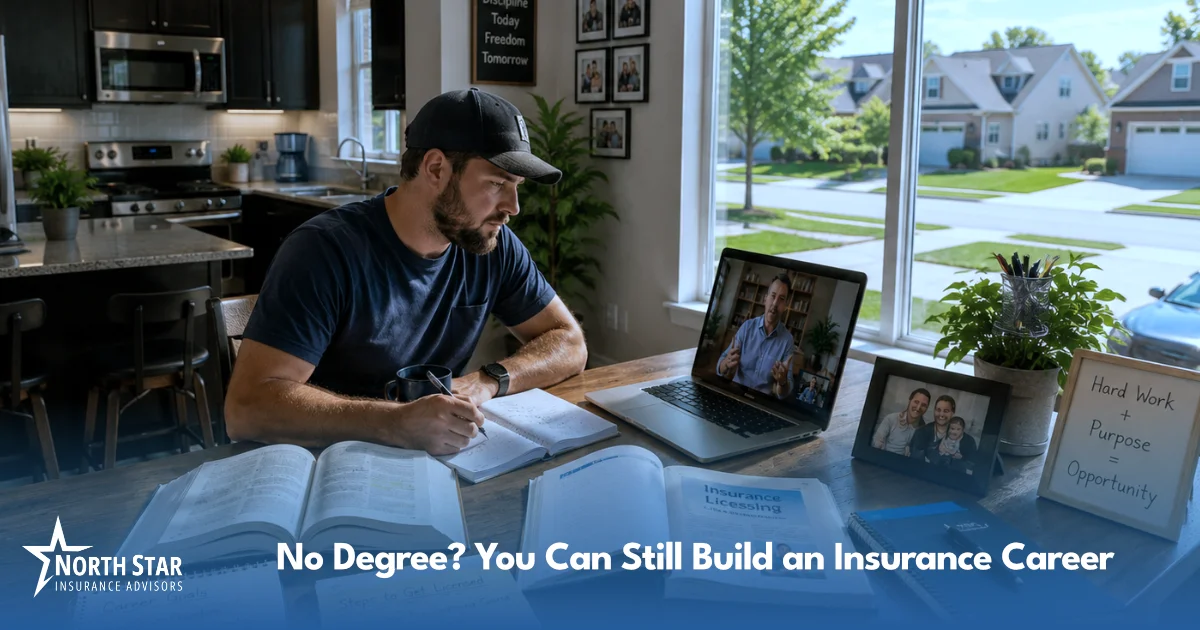
Licensing Matters More Than a Degree
One reason insurance careers are accessible to a broad range of people is that licensing often plays a larger role than academic credentials.
Most insurance professionals must complete licensing requirements before selling insurance products. This process typically involves:
- Completing pre-licensing education
- Passing a state licensing exam
- Meeting background requirements
- Maintaining continuing education
Once licensed, professionals are often evaluated based on performance and client service rather than their educational background.
Some of the Best Agents Started Elsewhere
The insurance industry is filled with professionals who began their careers in completely different fields.
Common backgrounds include:
- Retail
- Hospitality
- Customer service
- Healthcare
- Education
- Military service
- Trades and skilled labour
Many of these individuals bring valuable experience that translates directly into client communication and relationship-building.
Their success demonstrates that career potential is not limited by a specific educational path.
Communication Skills Drive Success
Insurance is fundamentally a people-focused industry. Professionals spend much of their time helping individuals and families understand options, evaluate needs, and make informed decisions.
Strong communication skills often have a greater impact on long-term success than academic qualifications.
Clients appreciate professionals who can:
- Explain information clearly
- Listen carefully
- Build trust
- Answer questions
- Provide guidance
These abilities are developed through practice and experience.
Modern Training Makes Entry Easier
The insurance industry has become increasingly supportive of new professionals entering the field.
Many organisations provide:
- Licensing support
- Virtual training
- Mentorship programmes
- Coaching
- Ongoing education
These resources help new agents develop industry knowledge regardless of their educational background.
Rather than expecting candidates to know everything on day one, many companies focus on helping them learn and grow.
Remote Opportunities Have Expanded Access
Technology has made insurance careers more accessible than ever before. Remote work opportunities allow professionals to build careers without relocating or commuting to traditional offices.
Today’s agents often use:
- Video conferencing
- Digital applications
- Electronic signatures
- CRM systems
- Online training platforms
This technology-driven environment creates opportunities for individuals seeking flexibility and career growth.
Employers Often Look Beyond Education
While education can be beneficial, many hiring managers focus on qualities that directly affect job performance.
Attributes employers frequently value include:
- Coachability
- Work ethic
- Integrity
- Time management
- Self-motivation
- Relationship-building skills
Candidates who demonstrate these qualities often stand out regardless of academic credentials.
Insurance Careers Offer Growth Potential
One reason many people enter insurance is the opportunity for advancement. Career progression is often influenced more by performance than by educational background.
Potential opportunities may include:
- Leadership roles
- Sales management
- Recruiting
- Training and mentorship
- Team development
- Business-building opportunities
This creates pathways for professionals who are committed to continuous improvement.
Income Is Often Linked to Performance
In many industries, earning potential is tied closely to academic qualifications. Insurance can be different.
Many positions include compensation structures that reward:
- Productivity
- Client service
- Relationship-building
- Professional development
- Business growth
As a result, motivated professionals can often increase their earning potential through effort and skill development.
Continuous Learning Still Matters
Building a successful insurance career without a degree does not mean learning stops. In fact, ongoing education remains an important part of professional growth.
Successful agents regularly improve their knowledge through:
- Training programmes
- Industry updates
- Product education
- Coaching
- Professional development
The difference is that learning continues throughout a career rather than being limited to formal education.
Why North Star Insurance Advisors Focuses on Potential
At North Star Insurance Advisors, we understand that great professionals come from many different backgrounds. While education can be valuable, we believe qualities such as character, communication, coachability, and commitment often play an even larger role in long-term success.
We focus on helping motivated individuals develop the skills needed to thrive in today’s insurance industry. With training, support, and modern technology, people from diverse experiences can build rewarding careers helping families protect their future.
Final Thoughts
A college degree can be valuable, but it is not the only route to a successful career. The insurance industry continues to create opportunities for individuals who are willing to learn, work hard, and develop meaningful relationships with clients.
If you’ve been holding back because you don’t have a degree, it may be time to reconsider what is possible. Many successful insurance professionals started exactly where you are today—and built careers based on skill, determination, and a commitment to helping others.
Related Articles to Read
Insurance Agent Careers Guide
Learn how licensing, training, and career progression work in the insurance industry.
Life Insurance Jobs Remote
Explore how remote insurance opportunities are opening doors for professionals from diverse backgrounds.
Life Insurance Agent Job Description
Understand the responsibilities and daily activities of modern insurance professionals.
Frequently Asked Questions
Yes. Many successful insurance professionals build careers without a university degree.
Licensing requirements are typically more important than academic degrees.
Many organizations provide training and support for entry-level candidates.
Communication, adaptability, organization, relationship-building, and professionalism.
Many professionals find insurance offers strong growth opportunities regardless of educational background.
Yes. Many positions now support remote work and flexible schedules.
Licensing requirements vary by state but generally involve education courses and a licensing exam.
In many insurance roles, income is influenced more by performance and productivity.
Yes. Many professionals move into management, recruiting, coaching, and leadership roles.
Insurance continues to offer stable opportunities because families consistently need financial protection.
Your Future Isn’t Defined by a Degree
Some of the most successful insurance professionals started with determination, strong communication skills, and a willingness to learn.
If you’re looking for a career with flexibility, growth potential, and meaningful opportunities, North Star Insurance Advisors may be the right place to start.