
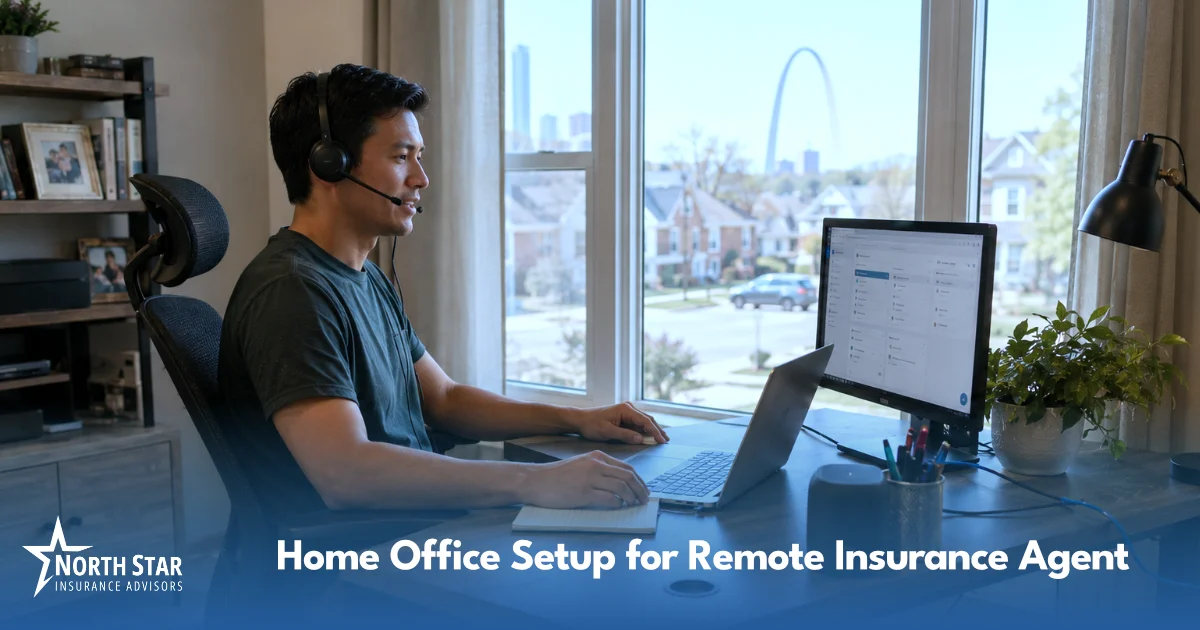
A dropped call mid-pitch doesn’t just cost you that conversation. On an inbound lead, it can cost you a sale that was ninety seconds from closing — and the prospect who hears static or an echo before you’ve even built trust rarely calls back. Most of what determines whether that happens has nothing to do with your sales skill and everything to do with what’s sitting on your desk.
You don’t need a $3,000 studio setup to sell final expense insurance from home. A solid headset, a wired internet connection, and a chair that doesn’t wreck your back after six hours are doing more work than most people realize until they’re missing one of them.
This is a practical, no-fluff list of what actually matters, what’s optional, and what most legitimate telesales platforms provide versus what’s genuinely on you to buy.
What You Actually Need vs. What’s Nice to Have
Start with the honest baseline. Selling final expense insurance by phone requires a working computer, a reliable internet connection, a decent headset, and a quiet enough space to have a real conversation. Everything past that is comfort and productivity, not a requirement.
That distinction matters because work-from-home commission careers don’t have a company issuing you a standard desk setup the way a traditional office job would — you’re building this yourself, which means it’s easy to either underspend on the parts that actually affect call quality or overspend on parts that don’t.
Internet and Connection: The One Thing That Actually Costs You Sales
Here’s the equipment failure that costs real money and gets blamed on everything else. General guidance for remote work puts a comfortable baseline at around 100 Mbps download and 20 Mbps upload — more than enough for calls, a CRM, and background tasks running at once. VoIP calling itself needs far less bandwidth than that, but it’s far more sensitive to latency and instability than raw speed numbers suggest.
Plug your computer directly into your router with an ethernet cable if you can. Wi-Fi introduces exactly the kind of intermittent lag that turns into dead air or a garbled sentence at the worst possible moment in a call — the kind of moment a typical day of remote insurance calls is built around avoiding.
Budget Tiers for a Telesales Home Office
| Tier | Approx. Cost | What It Covers |
| Bare minimum | $150–$300 | Basic wired headset, ethernet cable, existing computer, a quiet corner |
| Comfortable | $500–$900 | Quality noise-canceling headset, external monitor, proper desk chair |
| Upgraded | $1,000–$2,000 | Dual monitors, mechanical keyboard, better desk/chair, external webcam and lighting for video-based training or coaching calls |
These are general ranges, not a requirement to spend at any tier — the bare minimum tier genuinely covers what’s needed to work the job well; the rest is comfort and longevity.
The Headset Is the Single Most Important Piece of Equipment
If you buy one thing well, make it this. A business-grade headset with noise-canceling microphone technology can block a significant share of ambient background noise — the difference between a prospect hearing your voice clearly and hearing your voice plus your dog, your street, or your other monitor’s fan.
Look specifically for dual noise cancellation — one side blocking noise around you, the other cleaning up what the prospect hears on their end. Widely recommended options in this category include the Jabra Evolve2 50 and Evolve 20, and the Poly Voyager 5200 UC, spanning a range from roughly $50 budget options up through $150–$200 for advanced noise isolation. A wired USB headset is generally more reliable for all-day call volume than Bluetooth, which can introduce its own occasional dropout.
Computer, Monitor, and Desk Setup That Holds Up to Eight Hours of Calls
Your computer doesn’t need to be powerful — it needs to run a browser, a CRM, and a dialer without freezing mid-call. Most modern laptops handle this fine. A second monitor matters more than raw processing power, since having client information, a script, and your CRM visible at once beats tabbing between windows while someone’s talking.
A real desk chair earns its cost faster than almost anything else on this list. Eight hours of calls in a kitchen chair catches up with your back within weeks, not months, and that’s a productivity cost as real as a dropped call.
Software: CRM, Dialer, and the Tools That Aren’t Physical Equipment
Equipment isn’t just hardware. A CRM that tracks every lead, every callback, and every follow-up is what keeps a lead from going cold between calls — and on a platform providing inbound leads, the CRM is often part of what’s already built into the system rather than something you shop for separately.
If you are sourcing your own tools, look for a CRM with call logging and reminder scheduling built in, not just a contact list. The tool matters less than the habit of actually using it consistently — a great CRM used sporadically does less than a basic one used every single day.
What a Legitimate Platform Typically Provides vs. What’s on You
Reputable telesales organizations often provide the dialer, CRM, lead routing system, and training materials as part of the platform itself — the software layer specifically tied to how leads reach you. Physical hardware — your headset, computer, internet connection, and desk setup — is typically the agent’s responsibility, since it’s personal equipment you’ll use regardless of which specific role or company you’re with.
Ask directly what’s provided versus what you’re expected to bring before assuming either way. It’s a fair, normal question in any hiring conversation, and the answer tells you a lot about how the organization is actually structured.
Frequently Asked Questions
A general remote-work baseline of around 100 Mbps download and 20 Mbps upload is more than sufficient — VoIP calling itself needs far less bandwidth, but a stable, low-latency wired connection matters more than raw speed.
Business-grade wired USB headsets with dual noise cancellation, like the Jabra Evolve2 50 or Evolve 20, are commonly recommended for call-heavy remote sales work over consumer Bluetooth headsets.
Not strictly, but a second monitor is one of the highest-value upgrades on this list, letting you keep a script, CRM, and client details visible without constantly switching windows mid-call.
It varies by organization — many platforms provide the CRM, dialer, and lead routing system as part of how leads reach you, while physical equipment like your headset and computer are typically the agent’s own responsibility.
A functional setup can be built for $150–$300; a comfortable one with a quality headset, monitor, and proper chair runs closer to $500–$900, with more spent mainly improving comfort rather than call quality.
Final Thoughts
Don’t let equipment be the reason a good call goes badly. Get the headset and the wired connection right first — those two things affect whether the prospect can actually hear and trust you, which matters more than anything else on this list.
Everything past that baseline is about comfort and sustainability over an eight-hour day, not a requirement to start. Spend where it protects call quality, and ask any platform directly what’s already provided before you buy something redundant.
Apply as a Remote Sales Agent →
Related Links
- Work From Home Careers With Unlimited Income Potential — Part of our guide to work-from-home careers with unlimited income potential.
- A Day in the Life of a Remote Insurance Agent
- Leads for Insurance Agents: Types, Costs & What Actually Converts in 2026
- Career Opportunities at North Star Insurance Advisors