The rise of remote insurance work is one of the biggest trends shaping the industry today. In our pillar article, Will AI Replace Life Insurance Agents? Why Remote Insurance Careers Are Booming in 2026, we explore how technology is enabling insurance professionals to build successful careers from anywhere while maintaining strong client relationships.
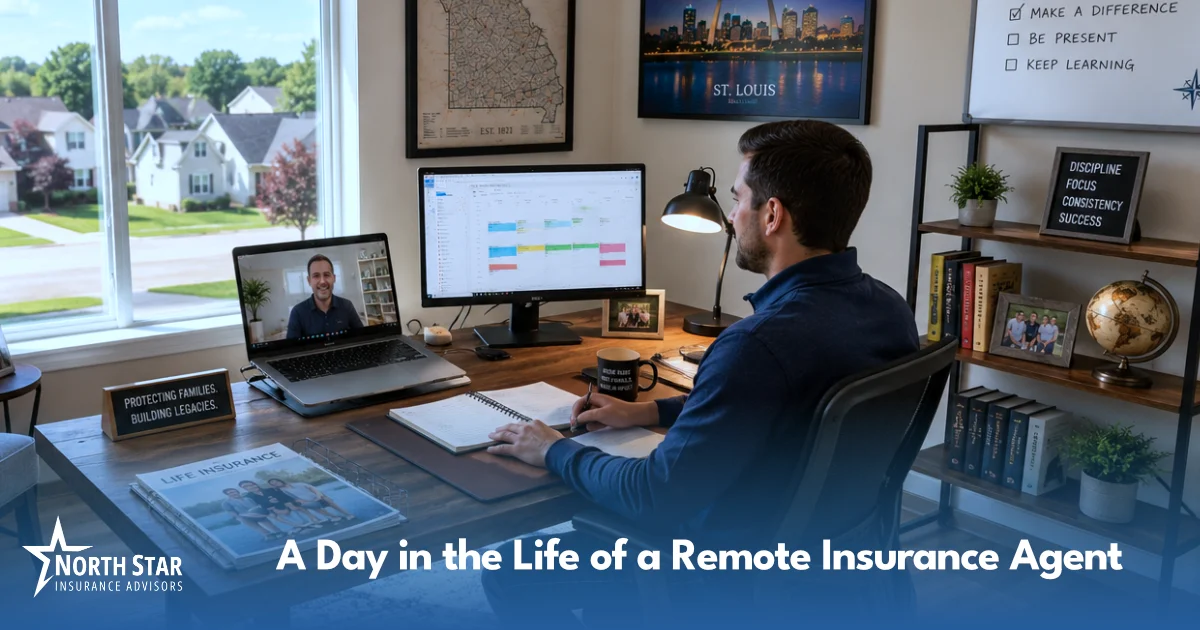
Remote work has changed the way many professionals build their careers, and the insurance industry is no exception. Thanks to video conferencing, digital applications, electronic signatures, and customer relationship management tools, insurance agents can now help clients without ever stepping into a traditional office.
For many people considering an insurance career, one question often comes up: what does a typical day actually look like? While every agent’s schedule is slightly different, most remote insurance professionals follow a routine focused on client communication, relationship-building, and helping families find the right coverage.
If you’re curious about remote insurance careers, here’s what a typical day might look like for a successful remote insurance agent in 2026.
Starting the Day
Most remote insurance agents begin their day by reviewing appointments, checking emails, and preparing for upcoming client conversations. Unlike traditional office jobs, many agents have flexibility in how they structure their schedule.
A typical morning might include:
- Reviewing new leads
- Confirming appointments
- Responding to client enquiries
- Checking follow-up tasks
- Reviewing policy information
This preparation helps ensure the rest of the day runs smoothly.
Connecting With Prospective Clients
One of the most important parts of an insurance agent’s day involves speaking with prospective clients. These conversations may take place over the phone, through video meetings, or occasionally through digital messaging platforms.
Rather than focusing solely on selling policies, successful agents spend time understanding a person’s situation and financial goals. This helps them recommend solutions that align with the client’s needs.
Every conversation is different because every family has different priorities and concerns.
Understanding Client Needs
Insurance is rarely a one-size-fits-all product. A young couple purchasing their first home may have very different coverage needs compared to a retiree planning for final expenses.
During consultations, agents often discuss topics such as:
- Family responsibilities
- Financial goals
- Existing coverage
- Budget considerations
- Long-term protection needs
These conversations allow agents to provide more personalised recommendations and build stronger relationships with clients.
Presenting Coverage Options
After understanding a client’s needs, agents typically review available coverage options. Modern insurance platforms allow professionals to compare products quickly and generate quotes in real time.
The goal is not simply to present prices. Agents help clients understand the differences between policy types, coverage amounts, and potential benefits so they can make informed decisions.
Technology helps streamline this process, but communication remains a critical part of the experience.
Managing Applications and Documentation
Once a client decides to move forward, the application process begins. Remote agents guide clients through digital forms, explain required information, and ensure paperwork is completed accurately.
Many applications can now be completed entirely online using:
- Electronic signatures
- Secure digital forms
- Online verification systems
- Automated underwriting tools
These technologies make the process more convenient for both clients and agents.
Following Up With Existing Clients
Not every conversation involves a new prospect. Successful agents dedicate time each day to maintaining relationships with existing clients.
Follow-up activities may include:
- Reviewing policy updates
- Answering questions
- Assisting with beneficiary changes
- Discussing additional coverage needs
- Providing ongoing support
These interactions often lead to stronger client retention and referrals.
Training and Professional Development
The insurance industry continues evolving, making ongoing education an important part of the job. Many remote agents spend time each week participating in training sessions or reviewing industry updates.
Training topics often include:
- Product updates
- Compliance requirements
- Sales techniques
- Technology tools
- Industry trends
Continuous learning helps agents remain competitive and better serve their clients.
Flexibility Is One of the Biggest Benefits
One reason many professionals are attracted to remote insurance careers is flexibility. Unlike many traditional office roles, agents often have more control over when and where they work.
This flexibility may allow agents to:
- Create personalised schedules
- Reduce commuting time
- Spend more time with family
- Work from different locations
- Improve work-life balance
While success still requires discipline and consistency, many agents appreciate having greater control over their day.
Challenges Remote Agents Face
Remote insurance careers offer many advantages, but they also come with challenges. Working independently requires self-motivation, organisation, and effective time management.
Common challenges include:
- Staying productive without supervision
- Managing multiple client conversations
- Handling rejection
- Maintaining compliance requirements
- Building relationships virtually
Successful agents develop systems and routines that help them overcome these obstacles.
Technology Powers the Modern Insurance Agent
Remote insurance careers would not be possible without technology. Today’s agents rely on a variety of digital tools to communicate with clients and manage their business.
Common tools include:
- CRM software
- Video conferencing platforms
- Electronic signature systems
- Online quoting tools
- Digital training platforms
These resources help agents provide efficient service while working remotely.
What Makes Remote Insurance Work Rewarding?
For many professionals, the most rewarding aspect of the job is helping people protect what matters most. Whether assisting a young family, supporting a retiree, or helping a business owner evaluate coverage options, agents often play an important role in major financial decisions.
Many agents also appreciate:
- Flexible work arrangements
- Income growth opportunities
- Professional development
- Meaningful client interactions
- Long-term career potential
These benefits continue attracting individuals to the profession.
Is Remote Insurance a Good Career?
Remote insurance careers are not suitable for everyone, but they can be highly rewarding for individuals who enjoy communication, relationship-building, and helping others.
Because technology has removed many traditional barriers, agents can now serve clients efficiently from virtually anywhere. This combination of flexibility and opportunity continues to make insurance one of the most attractive remote career options available.
Final Thoughts
A day in the life of a remote insurance agent involves much more than selling policies. It includes building relationships, educating clients, solving problems, and helping families make important financial decisions.
While technology has changed how agents work, the core purpose of the profession remains the same: helping people protect their future. For those seeking a flexible career with growth potential and meaningful work, remote insurance continues to offer exciting opportunities in 2026 and beyond.
Related Articles to Read
What Do Life Insurance Agents Do?
Learn more about the responsibilities, skills, and daily activities that help insurance professionals succeed.
Life Insurance Jobs From Home
Discover how remote insurance careers provide flexibility, growth potential, and work-life balance.
Frequently Asked Questions
Remote insurance agents communicate with clients, review coverage options, complete applications, and maintain client relationships.
Yes. Many insurance professionals now conduct consultations and applications remotely.
Schedules vary depending on the company, compensation structure, and individual preferences.
Sales are important, but agents also spend significant time educating clients and providing support.
CRM systems, video conferencing software, electronic signatures, and online quoting tools.
Many positions offer flexible schedules, allowing agents to structure their day around appointments and goals.
Methods vary and may include referrals, company-provided leads, digital marketing, and networking.
Communication, organization, active listening, time management, and relationship-building.
Like any sales profession, insurance can be challenging, but many agents find the work rewarding and meaningful.
Many professionals view remote insurance as an attractive career because of flexibility, earning potential, and long-term demand.
Curious About a Career as a Remote Insurance Agent?
Remote insurance professionals help families protect their future while enjoying the flexibility of working from home.
If you’re looking for a career that combines technology, relationship-building, and growth potential, explore the opportunities available today.