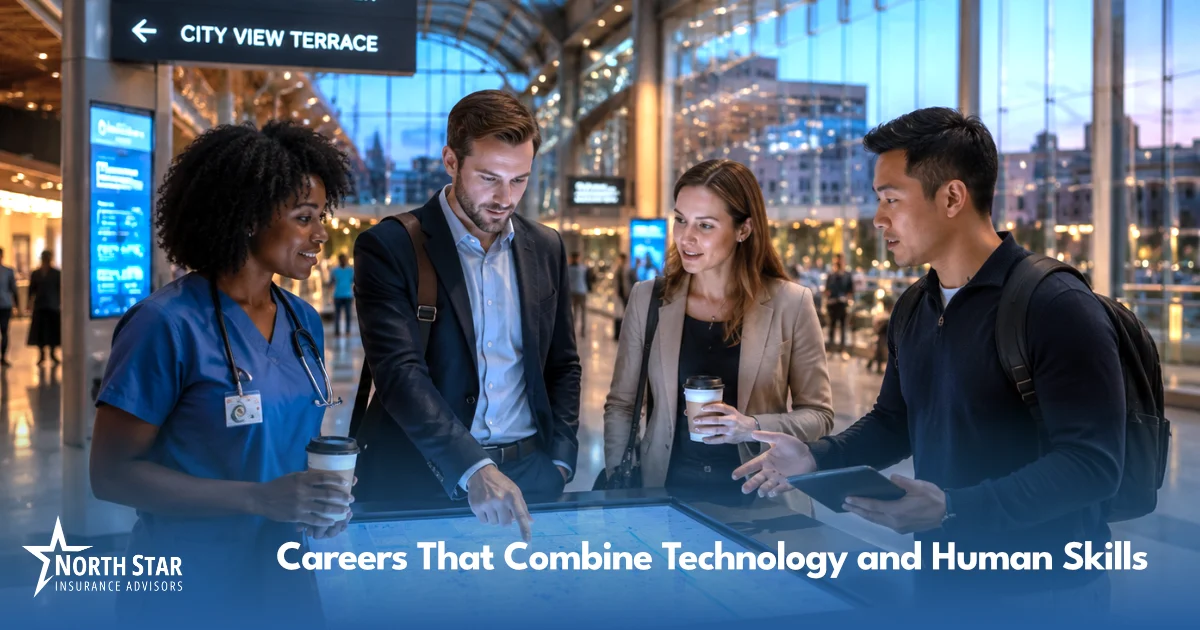
Artificial intelligence is transforming how businesses operate, but the most valuable professionals continue to combine technology with trust, communication, and human understanding. In our pillar guide, Will AI Replace Life Insurance Agents? Why Remote Insurance Careers Are Booming in 2026, we explore why relationship-driven careers continue to thrive alongside advancing technology.
For years, people have debated whether technology will eventually replace large portions of the workforce. As artificial intelligence becomes more capable, that conversation has only intensified. Yet the reality unfolding across many industries tells a different story.
The strongest career opportunities are not emerging from professions that avoid technology. Instead, they are appearing in careers where professionals use technology to become more effective while continuing to provide uniquely human value.
Employers increasingly seek individuals who can navigate both worlds. They want professionals who understand modern tools while also communicating effectively, building relationships, solving problems, and helping people make informed decisions.
This combination of technical capability and human skill is becoming one of the most valuable career assets in today’s workforce.
Technology Alone Is Rarely Enough
Technology has dramatically improved productivity across nearly every industry.
Businesses now use software to automate repetitive tasks, organise information, streamline communication, and improve operational efficiency. Artificial intelligence can assist with research, customer support, scheduling, reporting, and countless other responsibilities.
However, technology still requires people.
Clients want explanations. Teams need leadership. Customers expect trust. Employees require mentorship. Organizations depend on collaboration.
Technology can provide information, but people provide context, judgement, and understanding.
This is why many of the fastest-growing professions combine both technological proficiency and strong interpersonal skills.
Technology Is Enhancing Human Work
Rather than replacing professionals, technology is increasingly helping them perform at a higher level.
According to Microsoft’s 2025 Work Trend Index Annual Report, organizations are moving toward a future where AI supports employees by reducing routine work and allowing them to focus on higher-value activities such as decision-making, collaboration, and relationship-building.
This trend can be seen across numerous industries.
Professionals who learn how to leverage technology while strengthening communication and leadership skills may gain significant advantages in the years ahead.
Insurance Professionals
Insurance offers one of the strongest examples of a profession that successfully combines technology and human interaction.
Modern insurance professionals use:
- Digital applications
- Virtual consultations
- CRM platforms
- Automated workflows
- AI-powered quoting tools
At the same time, clients still depend on advisors to:
- Explain coverage options
- Understand family needs
- Evaluate risks
- Answer questions
- Build long-term financial strategies
Technology improves efficiency, but trust remains essential.
This is one reason many professionals continue exploring opportunities through an Insurance Agent Careers Guide or researching Life Insurance Jobs Remote and Remote Life Insurance Agent Jobs.
Healthcare Professionals
Healthcare continues evolving through advanced technologies, electronic medical records, predictive analytics, and AI-assisted diagnostics.
Yet patient care remains deeply human.
Healthcare professionals must communicate complex information, provide reassurance, support difficult decisions, and build trust with patients and families.
Technology supports healthcare delivery, but human interaction remains central to the profession.
Financial Advisors
Financial advisors increasingly use technology to analyze investments, monitor portfolios, and evaluate financial scenarios.
However, clients rarely seek financial guidance based solely on data.
People often want:
- Personalized recommendations
- Goal-based planning
- Emotional reassurance
- Long-term strategies
- Trusted advice
Technology helps advisors work more efficiently, but relationships continue driving client confidence.
Educators and Trainers
The education sector has embraced digital learning platforms, virtual classrooms, and AI-powered learning tools.
Yet effective teaching still requires communication, motivation, adaptability, and mentorship.
Students benefit from human guidance that technology alone cannot provide.
The most effective educators often use technology to enhance learning while maintaining strong personal connections.
Technology Consultants
Technology consultants represent another career path where human skills remain critical.
Although these professionals work closely with software systems, data platforms, and technical solutions, their success often depends on their ability to communicate effectively with clients and stakeholders.
Consultants frequently serve as translators between technical teams and business leaders.
Strong communication skills can be just as important as technical expertise.
Leadership Roles
Leadership remains one of the most human-centred responsibilities within any organization.
Managers must:
- Inspire teams
- Resolve conflicts
- Coach employees
- Communicate vision
- Make difficult decisions
Technology can provide insights and recommendations, but leadership ultimately depends on human judgement.
As businesses adopt more advanced technologies, strong leadership may become even more valuable.
Why Human Skills Continue To Matter
Many professionals worry that automation will reduce career opportunities. In reality, the value of human skills may actually increase.
Communication, empathy, adaptability, emotional intelligence, and problem-solving remain difficult to automate because they rely on human experiences and relationships.
Professionals who combine these skills with technological competence often position themselves for long-term success.
The future workforce is unlikely to reward people solely for technical knowledge or solely for interpersonal abilities. Increasingly, success will come from combining both.
Building a Career for the Future
Professionals preparing for future opportunities should focus on developing both technology skills and human capabilities.
This may include:
- Learning new software tools
- Improving communication skills
- Strengthening leadership abilities
- Building industry expertise
- Developing adaptability
- Enhancing problem-solving skills
The most resilient careers are often built around continuous learning.
Final Thoughts
The future of work is not a competition between people and technology. Instead, it is becoming a partnership between the two.
The World Economic Forum’s Future of Jobs Report 2025 identifies communication, leadership, adaptability, resilience, and social influence among the fastest-growing workplace skills. These capabilities complement technology rather than compete against it.
Professionals who learn how to combine modern tools with strong human skills may find themselves among the most valuable contributors in tomorrow’s workforce. Whether in insurance, healthcare, education, consulting, or leadership, careers that blend technology and human connection are likely to remain highly relevant for years to come.
Related Articles to Read
Insurance Agent Careers Guide
Discover how modern insurance professionals use technology, communication, and relationship-building to create successful careers.
Life Insurance Jobs Remote
Learn how insurance professionals are building flexible careers while serving clients through digital tools and virtual consultations.
Insurance Sales Representative Opportunity
Explore career opportunities that combine people skills, technology, and long-term growth potential.
Frequently Asked Questions
Many careers blend both, including insurance, healthcare, education, financial advising, consulting, and leadership positions.
As technology automates routine tasks, skills such as communication, empathy, adaptability, and critical thinking become increasingly valuable.
AI can support these professions, but careers that rely on trust, communication, and human judgement remain difficult to fully automate.
Yes. Modern insurance professionals use digital applications, virtual meetings, CRM systems, and automation tools while continuing to provide personal guidance.
Digital communication, CRM software, productivity tools, AI-assisted platforms, and data literacy are increasingly valuable across industries.
Absolutely. Many insurance, consulting, recruiting, and customer-focused roles now offer remote and hybrid opportunities.
Strong communication improves collaboration, client relationships, leadership effectiveness, and problem-solving capabilities.
Focus on developing both technical skills and human-centred abilities such as communication, leadership, adaptability, and emotional intelligence.
Insurance, healthcare, financial services, education, technology consulting, and professional services are expected to remain strong.
Professionals who can use technology effectively while building strong relationships often provide value that is difficult to automate.
Build a Career That Combines Technology and Human Connection
The future belongs to professionals who can leverage technology while maintaining the communication, trust, and leadership skills that people value most.
Insurance offers a unique opportunity to combine digital tools, remote flexibility, and meaningful client relationships into a rewarding long-term career.
Whether you’re starting fresh or looking for your next opportunity, explore how a career in insurance could fit your future goals.