
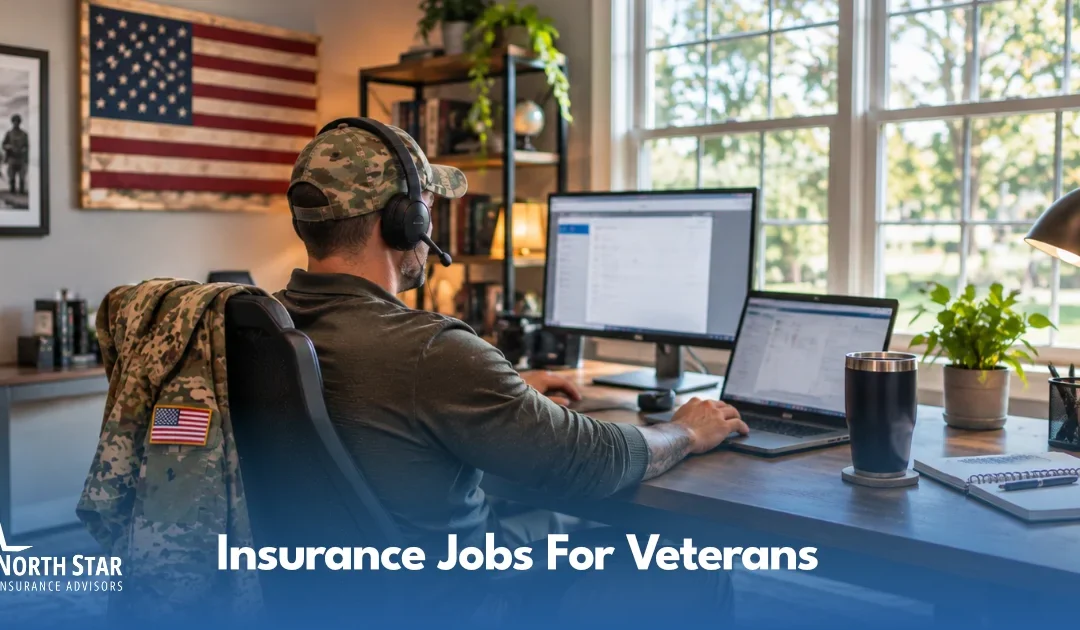
Insurance jobs are a strong fit for veterans because the work rewards what the military already trained into you: discipline, clear communication, following procedure, and staying calm under pressure. Most insurance sales roles don’t require a college degree, many can be done remotely, and the GI Bill can pay you back for the licensing exam. The biggest adjustment is moving from a structured chain of command to commission-based work you manage yourself.
Written by the North Star Insurance Advisors recruiting team. This Veterans Day, thank you to everyone who served. If you’re looking at what comes next, here’s an honest look at whether insurance sales fits.
Why veterans do well in insurance
Veterans do well in insurance because the job runs on reliability, and reliability is what military service builds. An insurance agent follows compliance rules on every call, documents everything accurately, shows up on schedule without being told, and keeps a steady tone with people who are stressed or grieving.
The transition market is large. The Bureau of Labor Statistics counted 17.3 million U.S. veterans in 2025, with a veteran unemployment rate of 3.5%, compared with 4.2% for nonveterans (BLS, Employment Situation of Veterans, April 2026). Veterans are finding work. The question is finding work that uses what they’re good at.
Insurance sales is a field with steady demand. BLS projects about 43,100 openings for insurance sales agents each year through 2035 (BLS Occupational Outlook Handbook).
How military skills translate to insurance sales
Most of what you did in uniform has a direct counterpart in insurance work. Here’s how the skills map:
| Military skill | How it shows up in insurance sales |
| Following SOPs and regulations | Following compliance rules and carrier guidelines on every application |
| Attention to detail in reports and inventories | Accurate applications, health questions, and beneficiary details |
| Clear, concise radio and briefing communication | Explaining coverage in plain language without rambling |
| Staying calm under pressure | Keeping a steady tone with anxious or grieving clients |
| Mission planning and accountability | Setting daily call goals and owning your results |
| Working without constant supervision (in the field) | Running a remote schedule with no one watching your clock |
| Training and mentoring junior troops | Coaching other agents and moving into team-lead roles |
A degree isn’t the gate here. Licensing and skills matter more than education, which is why so many agents start without one. Our article on building an insurance career without a degree goes deeper on that path.
Final expense: a mission-driven niche
Final expense insurance is a good match for veterans who want work with a clear purpose. Final expense policies are small whole life policies that cover funeral costs and final bills, so families aren’t left with the bill. Many clients are older adults, and many are veterans or military spouses themselves.
The need is concrete. The National Funeral Directors Association put the median cost of a funeral with viewing and burial at $8,300 in 2023 (NFDA). Helping someone make sure their family won’t have to cover that is a mission most veterans understand immediately.
Using your GI Bill for the licensing exam
You need a state insurance license to sell insurance, and the GI Bill can reimburse the exam cost. The VA pays back approved licensing and certification test fees, up to $2,000 per test, including retakes, for veterans covered under the Post-9/11 GI Bill, the Montgomery GI Bill (Active Duty or Selected Reserve), or the DEA program (VA.gov).
A few points to know:
- The reimbursement uses part of your GI Bill entitlement, based on the amount paid.
- It covers the test fee, not the license issuance fee.
- You apply with VA Form 22-0803 and your receipt and results.
- Many state insurance departments, including Missouri’s, publish guidance on this reimbursement.
Check that your specific exam is GI Bill-approved using the VA’s search tool before you schedule it.
What’s different from military life
The hardest adjustment for most veterans is the shift from structure to self-direction. In the military, the mission, schedule, and chain of command are set for you. In insurance sales, especially remote 1099 roles, you set them yourself.
- Commission instead of a set paycheck. Income depends on policies placed. Plan a savings cushion for the first few months.
- No chain of command watching your work. Self-discipline has to come from you. Most veterans already have this, but it feels different without the structure around it.
- Rejection is part of the job. Many conversations end in “no.” It isn’t personal, and it isn’t failure.
- Selling means listening. The best agents ask more than they tell. A briefing style works for explaining coverage but not for understanding a client.
Our list of what makes a great remote insurance agent covers the traits that carry agents through these adjustments: resilience, consistency, organization, and active listening.
Remote insurance work for veterans and military spouses
Remote insurance roles give veterans and military families flexibility that most jobs don’t. You can work from home with a headset, a computer, and a quiet space, and set your own schedule around appointments, school, or family.
For military spouses, keep in mind that insurance licenses are issued state by state. If you move, you may need a nonresident license or to transfer your resident license. Remote employers also hire only in certain states, so confirm that your state is eligible before you apply.
At North Star, remote agents take inbound final expense calls: prospects who asked about coverage are transferred live to a licensed agent, so there’s no cold calling. If structure and a clear daily routine matter to you, see how the remote sales agent role works.
How to move from the military into insurance
Most veterans can make the transition in five steps:
- Translate your experience. Rewrite military roles in civilian terms: “managed equipment accountability for a 40-person unit” instead of an MOS code.
- Get licensed in your resident state. Check your state insurance department’s requirements, and confirm your exam is GI Bill-approved for reimbursement.
- Pick a niche and a model. Final expense with inbound leads is one of the most direct starting points, since the product is simple and you don’t have to prospect.
- Ask the right questions before you sign. Leads, pay structure, chargebacks, and contract terms vary widely between agencies.
- Set up your workspace. A quiet room, a quality headset, and reliable internet for remote roles.
Frequently asked questions
Are insurance jobs good for veterans?
Yes. Insurance sales rewards discipline, clear communication, attention to detail, and composure under pressure, all skills military service builds. Most roles don’t require a degree, many are remote, and demand is steady, with BLS projecting about 43,100 openings for insurance sales agents each year through 2035.
Can I use my GI Bill to get an insurance license?
Yes, for the exam. The VA reimburses approved licensing test fees up to $2,000 per test, including retakes, for veterans covered under the Post-9/11 GI Bill, Montgomery GI Bill, or DEA program. It doesn’t cover the license issuance fee. Submit VA Form 22-0803 with your receipt and results.
Do I need a degree to sell insurance after the military?
No. Insurance sales agents need a state license, not a college degree. Licensing typically requires a pre-licensing course and a state exam. Many successful agents start without a degree and rely on communication skills, discipline, and training from their agency.
What military skills transfer to insurance sales?
Following procedures and regulations, attention to detail, clear communication, composure under pressure, accountability for results, and working without constant supervision all transfer directly. Compliance and accurate documentation in insurance work mirror the standards veterans followed in service.
Can military spouses work remote insurance jobs?
Yes, many remote insurance roles suit military spouses because the work happens by phone from home. Licenses are issued by state, so a move may require a nonresident license or a license transfer, and remote employers hire only in certain states. Confirm eligibility before applying.
Ready for your next mission?
North Star hires licensed agents to take inbound final expense calls from home, with leads provided, carrier contracting handled, and a Business Advisor team to support you through onboarding. If you’re licensed and ready to put your military discipline to work, apply for a remote sales agent role.